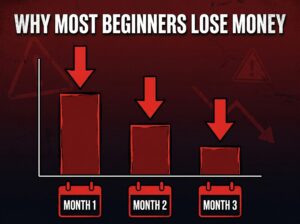
통계에 따르면 데이 트레이더의 70~90%가 결국 돈을 잃으며, 80%는 첫 2년 내에 포기합니다. 크립토 시장에서는 이 과정이 더 빨라서 대부분의 초보자가 첫 3개월 안에 의미 있는 손실을 경험합니다. 2025년 10월에는 24시간 만에 레버리지 포지션 190억 달러가 청산되었습니다. 이 글에서는 초보자가 첫 3개월에 돈을 잃는 7가지 핵심 이유 — FOMO 거래, 과도한 레버리지, 손절 미설정, 전략 없는 거래, 뉴스에 감정적 반응, 과도한 거래, 리스크 관리 무시 — 를 분석하고, 각각에 대한 구체적 해결책을 제시합니다. 실패를 아는 것이 성공의 첫걸음입니다.
The Numbers Do Not Lie
The statistics are brutal. According to multiple studies, 70 to 90 percent of retail traders ultimately lose money in the markets. Research from Tradeciety shows that 80 percent of all day traders quit within the first two years, and nearly 40 percent quit after just one month. A 2025 Investing.com analysis of 25,000 trading accounts found that despite some traders having high win rates, 82 percent still lost money overall because their losing trades were much larger than their winning ones.
In the crypto market specifically, the numbers are even more alarming. In October 2025 alone, over $19 billion in leveraged positions were liquidated in just 24 hours. A Kraken survey revealed that 84 percent of crypto investors have made decisions based on FOMO, and 81 percent based on FUD (fear, uncertainty, and doubt). Between October 2025 and February 2026, Bitcoin corrected approximately 50 percent, according to CME Group data — wiping out countless beginner accounts along the way.
These numbers are not meant to discourage you. They are meant to show you exactly what you are up against so you can avoid the same mistakes.
숫자는 거짓말하지 않는다
통계는 잔인합니다. 여러 연구에 따르면 소매 트레이더의 70~90%가 결국 시장에서 돈을 잃습니다. Tradeciety의 연구는 데이 트레이더의 80%가 첫 2년 내에 포기하고, 거의 40%가 단 한 달 만에 포기한다고 보여줍니다. 2025년 Investing.com의 25,000개 트레이딩 계좌 분석에서는 일부 트레이더가 높은 승률을 보임에도 82%가 여전히 전체적으로 손실이었는데, 그 이유는 손실 거래가 수익 거래보다 훨씬 컸기 때문입니다.
크립토 시장은 더 심각합니다. 2025년 10월에만 24시간 만에 레버리지 포지션 190억 달러 이상이 청산되었습니다. Kraken 설문조사에 따르면 크립토 투자자의 84%가 FOMO에 기반한 결정을, 81%가 FUD(공포, 불확실성, 의심)에 기반한 결정을 내린 적이 있습니다. CME Group 데이터에 따르면 2025년 10월부터 2026년 2월까지 비트코인은 약 50% 조정되었으며 — 그 과정에서 수많은 초보자 계좌가 사라졌습니다.
이 숫자들은 의욕을 꺾으려는 것이 아닙니다. 당신이 무엇에 맞서고 있는지 정확히 보여줌으로써 같은 실수를 피할 수 있게 하려는 것입니다.
Mistake 1 — Trading on FOMO Instead of a Plan
The single most common reason beginners lose money is entering trades based on emotion rather than analysis. You see Bitcoin jumping $4,000 in a day — like the April 8 ceasefire rally from $68,000 to $72,000 — and you buy at the top because you are afraid of missing out.
FOMO-driven entries almost always happen at the worst possible time. By the time you feel the urge to buy, the move has already happened. Professional traders were positioned before the move. You are buying their exits.
The fix is simple but requires discipline. Never enter a trade without checking the RSI, confirming volume, and identifying support and resistance levels. If you cannot explain why you are entering a trade using technical terms, you should not be entering it.
실수 1 — 계획 대신 FOMO로 거래하기
초보자가 돈을 잃는 가장 흔한 이유는 분석이 아닌 감정에 기반해 거래에 진입하는 것입니다. 비트코인이 하루에 $4,000 뛰는 것을 봅니다 — 4월 8일 휴전 랠리로 $68,000에서 $72,000까지 — 그리고 뒤처질까 두려워 고점에서 매수합니다.
FOMO에 의한 진입은 거의 항상 최악의 타이밍에 발생합니다. 매수 충동을 느낄 때쯤이면 움직임은 이미 끝났습니다. 전문 트레이더들은 움직임 전에 포지션을 잡았습니다. 당신은 그들의 매도를 사는 것입니다.
해결책은 간단하지만 규율이 필요합니다. RSI를 확인하고, 거래량을 확인하고, 지지·저항 수준을 파악하지 않고는 절대 거래에 진입하지 마세요. 기술적 용어로 왜 진입하는지 설명할 수 없다면, 진입해서는 안 됩니다.
Mistake 2 — Using Too Much Leverage Too Soon
Leverage is the fastest way to blow up a trading account. When a beginner discovers they can trade with 10x or 20x leverage, the temptation is overwhelming — turning $500 into a $10,000 position feels like a shortcut to wealth.
But leverage works both ways. A 10 percent move against a 10x leveraged position results in a total loss. The $19 billion in liquidations from October 2025 was not caused by terrible traders — it was caused by normal traders using excessive leverage during a volatile period.
If you are in your first three months, avoid leverage entirely. Trade spot markets only. Once you have at least six months of consistent spot trading experience and a proven track record, consider starting with 2x to 3x leverage maximum, and never on your full capital. Always trade futures with money you can afford to lose.
실수 2 — 너무 일찍 과도한 레버리지 사용
레버리지는 트레이딩 계좌를 날리는 가장 빠른 방법입니다. 초보자가 10배 또는 20배 레버리지로 거래할 수 있다는 것을 발견하면 유혹이 압도적입니다 — $500을 $10,000 포지션으로 만드는 것이 부의 지름길처럼 느껴집니다.
하지만 레버리지는 양방향으로 작동합니다. 10배 레버리지 포지션에서 10% 역방향 움직임은 전액 손실을 의미합니다. 2025년 10월의 190억 달러 청산은 끔찍한 트레이더들 때문이 아니었습니다 — 변동성 높은 시기에 과도한 레버리지를 사용한 보통 트레이더들 때문이었습니다.
첫 3개월이라면 레버리지를 완전히 피하세요. 현물 시장에서만 거래하세요. 최소 6개월의 일관된 현물 거래 경험과 입증된 실적이 있은 후에 최대 2~3배 레버리지로 시작하는 것을 고려하세요. 전체 자본으로는 절대 하지 마세요. 항상 잃어도 되는 돈으로 선물을 거래하세요.
Mistake 3 — Not Setting Stop-Losses
The Investing.com study of 25,000 accounts revealed the core problem — traders who lost money overall did so because their losing trades were far larger than their winners. This happens when you do not set stop-losses and let losing positions run, hoping they will recover.
Hope is not a strategy. A 10 percent loss requires an 11 percent gain to break even. A 50 percent loss requires a 100 percent gain. The deeper you let a loss run, the harder it becomes to recover mathematically.
Every trade needs a stop-loss set before entry, not after. We covered this in detail in our guide on managing multiple positions. The 1-2% rule ensures that no single trade can cause serious damage to your portfolio.
실수 3 — 손절 미설정
Investing.com의 25,000개 계좌 연구는 핵심 문제를 드러냈습니다 — 전체적으로 돈을 잃은 트레이더들은 손실 거래가 수익 거래보다 훨씬 컸기 때문입니다. 이는 손절을 설정하지 않고 회복되기를 바라며 손실 포지션을 방치할 때 발생합니다.
희망은 전략이 아닙니다. 10% 손실은 본전을 만들기 위해 11% 수익이 필요합니다. 50% 손실은 100% 수익이 필요합니다. 손실을 깊게 방치할수록 수학적으로 회복이 어려워집니다.
모든 거래에 진입 전, 진입 후가 아닌 진입 전에 손절이 설정되어야 합니다. 여러 포지션 관리 가이드에서 이를 자세히 다뤘습니다. 1~2% 룰은 단일 거래가 포트폴리오에 심각한 손상을 줄 수 없도록 보장합니다.
Mistake 4 — Trading Without a Strategy
Many beginners open trades based on tips from social media, YouTube thumbnails, or Telegram groups. They have no personal strategy, no entry criteria, no exit plan, and no risk management framework.
A trading strategy does not need to be complicated. It can be as simple as: “I only buy Bitcoin when the RSI is below 35, the price is near the 200-day moving average, and the MACD shows a bullish crossover. My stop-loss goes 3 percent below my entry, and my profit target is 6 percent above.”
That is a complete strategy. It defines when to enter, when to exit at a loss, and when to exit at a profit. Without these three elements, you are not trading — you are gambling.
실수 4 — 전략 없이 거래하기
많은 초보자들이 소셜 미디어, 유튜브 썸네일, 텔레그램 그룹의 팁에 기반해 거래를 엽니다. 개인 전략도, 진입 기준도, 매도 계획도, 리스크 관리 프레임워크도 없습니다.
트레이딩 전략은 복잡할 필요가 없습니다. 다음처럼 간단할 수 있습니다: “RSI가 35 아래이고, 가격이 200일 이동평균선 근처이며, MACD가 강세 크로스오버를 보여줄 때만 비트코인을 매수한다. 손절은 진입가에서 3% 아래, 수익 목표는 6% 위.”
이것이 완전한 전략입니다. 언제 진입하고, 언제 손실로 매도하고, 언제 수익으로 매도할지 정의합니다. 이 세 가지 요소 없이는 트레이딩이 아닙니다 — 도박입니다.
Mistake 5 — Reacting Emotionally to News
The Iran-Hormuz Bitcoin toll announcement on April 8 is a perfect example. Bitcoin surged $4,000 in hours, and social media exploded with bullish predictions. Beginners who bought at $72,000 based on the headline are now watching the price consolidate around $71,800 with uncertainty about whether the ceasefire will hold.
Professional traders react to news differently. They wait for the initial spike to settle, analyze the volume behind the move, check whether the price holds above key levels, and only then make a decision. They know that the first reaction to news is almost always an overreaction.
Your approach should be the same. When a major headline hits, do not open your exchange app for at least 30 minutes. Let the market digest the news. Then analyze the chart with your technical tools and make a calm, planned decision.
실수 5 — 뉴스에 감정적으로 반응하기
4월 8일 이란-호르무즈 비트코인 통행료 발표가 완벽한 예입니다. 비트코인이 몇 시간 만에 $4,000 급등했고, 소셜 미디어는 강세 예측으로 폭발했습니다. 헤드라인에 기반해 $72,000에 매수한 초보자들은 이제 휴전이 유지될지 불확실한 가운데 $71,800 주변에서 가격이 횡보하는 것을 지켜보고 있습니다.
전문 트레이더는 뉴스에 다르게 반응합니다. 초기 급등이 안정될 때까지 기다리고, 움직임 뒤의 거래량을 분석하고, 가격이 주요 레벨 위를 유지하는지 확인한 후에야 결정을 내립니다. 뉴스에 대한 첫 반응은 거의 항상 과잉 반응이라는 것을 알기 때문입니다.
접근 방식은 동일해야 합니다. 주요 헤드라인이 나오면 최소 30분 동안 거래소 앱을 열지 마세요. 시장이 뉴스를 소화하게 하세요. 그런 다음 기술적 도구로 차트를 분석하고 차분하고 계획된 결정을 내리세요.
Mistake 6 — Overtrading
Overtrading means opening too many trades too frequently, often out of boredom, excitement, or the desire to “make back” a recent loss. Each trade carries fees, spreads, and emotional cost. When you trade 10 times a day, even small fees compound into significant drag on your returns.
The Tradeciety statistics show that traders who trade less frequently tend to perform better than those who trade constantly. Quality over quantity. One well-researched trade per day will outperform ten impulsive trades every time.
Set a rule for yourself — maximum two to three trades per day when starting out. If you have already hit your daily limit, close the charts and walk away. The market will be there tomorrow.
실수 6 — 과도한 거래
과도한 거래란 너무 많은 거래를 너무 자주 여는 것으로, 종종 지루함, 흥분, 또는 최근 손실을 “만회”하려는 욕구에서 비롯됩니다. 각 거래에는 수수료, 스프레드, 감정적 비용이 따릅니다. 하루 10번 거래하면 작은 수수료도 복리로 쌓여 수익률에 상당한 부담이 됩니다.
Tradeciety 통계에 따르면 거래 빈도가 낮은 트레이더가 끊임없이 거래하는 트레이더보다 실적이 좋은 경향이 있습니다. 양보다 질입니다. 잘 조사된 하루 한 번의 거래가 매번 10번의 충동적 거래를 이깁니다.
자신을 위한 규칙을 정하세요 — 시작할 때 하루 최대 2~3번 거래. 일일 한도에 도달했으면 차트를 닫고 자리를 뜨세요. 시장은 내일도 있습니다.
Mistake 7 — Ignoring Risk Management Entirely
This is the umbrella mistake that encompasses all the others. Beginners often focus entirely on finding the next big trade while ignoring how much they could lose if things go wrong. They skip the 1-2% rule, trade without stop-losses, use excessive leverage, and invest money they cannot afford to lose.
Risk management is not sexy. It does not produce exciting stories for social media. But it is the only thing that keeps you in the game long enough to become profitable. The 10 to 20 percent of traders who survive and thrive do so not because they have secret strategies — they survive because they manage risk better than everyone else.
Use dollar-cost averaging to remove timing risk. Keep 15 to 20 percent of your portfolio in stablecoins. Set stop-losses on every trade. Never exceed your position limit. Review your positions daily. These habits are what separate the 80 percent who quit from the 20 percent who build wealth.
실수 7 — 리스크 관리를 완전히 무시
이것은 다른 모든 실수를 포괄하는 우산 실수입니다. 초보자들은 종종 일이 잘못되면 얼마를 잃을 수 있는지 무시하면서 다음 큰 거래를 찾는 데만 집중합니다. 1~2% 룰을 건너뛰고, 손절 없이 거래하고, 과도한 레버리지를 사용하고, 잃어서는 안 되는 돈을 투자합니다.
리스크 관리는 화려하지 않습니다. 소셜 미디어를 위한 흥미진진한 이야기를 만들지 않습니다. 하지만 수익을 낼 수 있을 만큼 오래 게임에 남게 해주는 유일한 것입니다. 생존하고 번영하는 10~20%의 트레이더들은 비밀 전략이 있어서가 아닙니다 — 다른 모든 사람보다 리스크를 더 잘 관리하기 때문에 생존합니다.
달러코스트 애버리징으로 타이밍 리스크를 제거하세요. 포트폴리오의 15~20%를 스테이블코인으로 유지하세요. 모든 거래에 손절을 설정하세요. 포지션 제한을 초과하지 마세요. 매일 포지션을 점검하세요. 이 습관들이 포기하는 80%와 부를 쌓는 20%를 구분합니다.
Your First 3 Months Survival Plan
Instead of trying to make money in your first three months, focus on not losing it. Here is your survival plan. Month one — trade spot only, use the smallest possible position sizes, and focus on learning to read charts with RSI, moving averages, MACD, and candlestick patterns. Month two — start applying the 1-2% rule, track every trade in a journal, and review your wins and losses weekly. Month three — refine your strategy based on your journal data, increase position sizes slightly if profitable, and begin building a watchlist of assets you understand well.
If after three months you have not lost more than 10 percent of your starting capital, you are already outperforming the majority of beginners. That is success.
Start practicing with small amounts on Tapbit, which offers low-minimum deposits and all the tools beginners need to build proper trading habits from day one.
첫 3개월 생존 계획
첫 3개월 동안 돈을 벌려고 하는 대신, 잃지 않는 것에 집중하세요. 생존 계획입니다. 1개월차 — 현물만 거래하고, 가능한 가장 작은 포지션 크기를 사용하며, RSI, 이동평균선, MACD, 캔들스틱 패턴으로 차트 읽기를 배우는 데 집중하세요. 2개월차 — 1~2% 룰을 적용하기 시작하고, 모든 거래를 저널에 기록하며, 매주 승패를 검토하세요. 3개월차 — 저널 데이터를 기반으로 전략을 정제하고, 수익이 나면 포지션 크기를 약간 늘리며, 잘 이해하는 자산의 관심 목록을 구축하세요.
3개월 후 시작 자본의 10% 이상을 잃지 않았다면, 이미 대다수 초보자를 앞서고 있는 것입니다. 그것이 성공입니다.
Tapbit에서 소액으로 연습하세요. 낮은 최소 입금액과 초보자가 첫날부터 올바른 거래 습관을 만드는 데 필요한 모든 도구를 제공합니다.
Disclosure: This article contains affiliate links. We may earn a commission at no extra cost to you.