Most traders know they should keep a trading journal. Almost none of them actually do it. And among those who do, many just write down “bought BTC at $74K” and never look at it again. That is not a journal — that is a receipt. A real trading journal is the single most effective tool for turning yourself from a losing trader into a consistently profitable one. According to JournalPlus, traders who journal regularly report up to a 30% improvement in win rate and significantly better discipline. The reason is simple: you cannot fix what you do not measure.
대부분의 트레이더는 거래 일지를 써야 한다는 것을 압니다. 하지만 실제로 하는 사람은 거의 없습니다. 그나마 쓰는 사람들도 “BTC $74K에 매수”라고만 적고 다시 보지 않습니다. 그것은 일지가 아니라 영수증입니다. 진정한 거래 일지는 손실을 보는 트레이더에서 꾸준히 수익을 내는 트레이더로 변화시키는 가장 효과적인 도구입니다. JournalPlus에 따르면, 꾸준히 일지를 작성하는 트레이더는 승률이 최대 30% 개선되고 규율도 크게 향상됩니다. 이유는 간단합니다: 측정하지 않는 것은 고칠 수 없습니다.
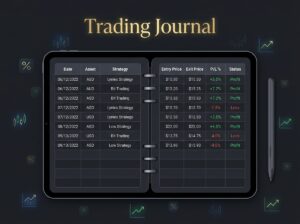
Why Most Traders Skip Journaling (And Why That Costs Them Money)
The biggest excuse is “I do not have time.” But if you have time to watch charts for hours, scroll through Crypto Twitter, and obsess over 1-minute candles, you have 5 minutes to log a trade. The real reason most people skip journaling is that it forces them to confront their mistakes. Nobody enjoys reading “entered FOMO trade, no stop-loss, lost 8%.” But that discomfort is exactly what creates growth.
가장 큰 핑계는 “시간이 없다”입니다. 하지만 몇 시간이고 차트를 보고, 크립토 트위터를 스크롤하고, 1분봉에 집착할 시간이 있다면 거래 한 건 기록할 5분은 있습니다. 대부분이 일지를 건너뛰는 진짜 이유는 자신의 실수를 직면하게 되기 때문입니다. “FOMO 거래 진입, 손절 없음, 8% 손실”이라고 읽고 싶은 사람은 없습니다. 하지만 바로 그 불편함이 성장을 만듭니다.
Without a journal, you repeat the same mistakes without realizing it. You tell yourself “I will never chase a pump again” on Monday and do exactly that on Wednesday. A journal creates a paper trail of your behavior — patterns become visible, and improvement becomes measurable.
일지 없이는 같은 실수를 인식조차 못 한 채 반복합니다. 월요일에 “다시는 펌프를 쫓지 않겠다”고 다짐하고 수요일에 똑같은 일을 합니다. 일지는 당신의 행동을 기록으로 남깁니다 — 패턴이 보이게 되고, 개선이 측정 가능해집니다.
What to Record: The 12 Essential Fields
A good trading journal captures both the technical data and the emotional context of every trade. Here are the 12 fields you should track for every single trade:
좋은 거래 일지는 모든 거래의 기술적 데이터와 감정적 맥락을 모두 기록합니다. 매 거래마다 추적해야 할 12가지 항목은 다음과 같습니다:
1. Date and time — When you entered the trade. This helps you spot patterns like “I lose more money during Asian session” or “my worst trades happen on Fridays.”
1. 날짜와 시간 — 거래 진입 시점. “아시아 세션에서 더 많이 잃는다” 또는 “금요일 거래가 최악이다” 같은 패턴을 발견하는 데 도움됩니다.
2. Asset — Which coin or pair you traded (e.g., BTC/USDT, ETH/USDT, SOL/USDT).
2. 자산 — 거래한 코인 또는 페어 (예: BTC/USDT, ETH/USDT, SOL/USDT).
3. Direction — Long (buy) or short (sell).
3. 방향 — 롱(매수) 또는 숏(매도).
4. Entry price — The exact price at which you entered.
4. 진입 가격 — 진입한 정확한 가격.
5. Position size — How much capital you allocated. Record both the dollar amount and the quantity.
5. 포지션 크기 — 배정한 자본. 달러 금액과 수량 모두 기록합니다.
6. Stop-loss price — Where you placed your stop-loss. If you did not set one, write “NONE” — and face that truth during your review.
6. 손절 가격 — 손절을 설정한 위치. 설정하지 않았으면 “없음”이라고 적고, 리뷰할 때 그 사실을 직면하세요.
7. Profit target — Your planned exit price for profit.
7. 수익 목표 — 계획한 수익 청산 가격.
8. Exit price — The actual price at which you closed the trade.
8. 청산 가격 — 실제로 거래를 종료한 가격.
9. Dollar P&L — The profit or loss in dollars.
9. 손익(달러) — 달러 기준 수익 또는 손실.
10. Reason for entry — This is critical. Write the specific technical reason: “RSI below 30 at Fibonacci 38.2% level with volume spike.” If your reason was “it felt like it was going up,” write that honestly too.
10. 진입 이유 — 가장 중요합니다. 구체적인 기술적 이유를 적으세요: “피보나치 38.2%에서 RSI 30 미만, 거래량 급증.” 만약 이유가 “올라갈 것 같았다”면 그것도 솔직하게 적으세요.
11. Reason for exit — Did you hit your target? Did you get stopped out? Did you panic sell? Be honest.
11. 청산 이유 — 목표에 도달했나요? 손절에 걸렸나요? 패닉 매도했나요? 솔직하게 적으세요.
12. Emotion before and during the trade — Rate your emotional state on a scale of 1 to 5 (1 = calm, 5 = anxious/excited). Over time, you will discover that trades made at emotion level 4-5 lose money far more often than trades made at level 1-2.
12. 거래 전·중 감정 상태 — 감정을 1-5 척도로 평가합니다 (1 = 평온, 5 = 불안/흥분). 시간이 지나면 감정 4-5에서 한 거래가 1-2에서 한 거래보다 훨씬 자주 손실을 낸다는 것을 발견하게 됩니다.
Sample Journal Entry
Here is what a real journal entry looks like:
실제 일지 항목의 예시입니다:
Date: 2026-04-21 14:30 KST | Asset: BTC/USDT | Direction: Long | Entry: $73,800 | Size: 0.07 BTC ($5,166) | Stop-loss: $72,300 | Target: $76,500 | Exit: $75,200 | P&L: +$98 | Reason for entry: Price bounced off support at $73,500, RSI was 34, volume increasing, near Fibonacci 23.6% level. | Reason for exit: Took partial profit at $75,200 because RSI hit 65 and approaching sell wall in order book. Did not reach full target but secured profit. | Emotion: 2/5 (mostly calm, slight excitement when price spiked to $75K).
날짜: 2026-04-21 14:30 KST | 자산: BTC/USDT | 방향: 롱 | 진입: $73,800 | 크기: 0.07 BTC ($5,166) | 손절: $72,300 | 목표: $76,500 | 청산: $75,200 | 손익: +$98 | 진입 이유: $73,500 지지선 반등, RSI 34, 거래량 증가, 피보나치 23.6% 근접. | 청산 이유: $75,200에서 부분 수익 실현, RSI 65 도달, 오더북에서 매도벽 접근. 전체 목표 미달이나 수익 확보. | 감정: 2/5 (대체로 평온, $75K 급등 시 약간 흥분).
Free Tools to Build Your Journal
You do not need expensive software to start. The best beginner options are completely free.
시작하는 데 비싼 소프트웨어가 필요하지 않습니다. 최고의 초보자용 옵션은 완전히 무료입니다.
Google Sheets or Excel — The simplest option. Create a spreadsheet with the 12 columns listed above. You have full control over the layout, and it works on any device. This is what most professional traders started with, and many still use it. The downside is that you must enter every trade manually.
Google Sheets 또는 Excel — 가장 간단한 옵션입니다. 위에 나열한 12개 열로 스프레드시트를 만드세요. 레이아웃을 완전히 제어할 수 있고 모든 기기에서 작동합니다. 대부분의 전문 트레이더가 이것으로 시작했고, 많은 분이 여전히 사용합니다. 단점은 모든 거래를 수동 입력해야 한다는 것입니다.
TradesViz (free tier) — Offers 3,000 trade executions per month for free. It syncs with major exchanges, provides automatic analytics including win rate, average R:R, drawdown charts, and more. It is one of the most feature-rich free options available in 2026.
TradesViz (무료 플랜) — 월 3,000건의 거래 실행을 무료로 제공합니다. 주요 거래소와 동기화되며, 승률, 평균 R:R, 드로다운 차트 등 자동 분석을 제공합니다. 2026년 기준 가장 기능이 풍부한 무료 옵션 중 하나입니다.
TraderMake.Money — A free crypto-specific trading journal. It connects to exchanges like Binance and Bybit, automatically imports trades, and visualizes your performance. Great for beginners who want a crypto-focused tool with zero cost.
TraderMake.Money — 암호화폐 전용 무료 거래 일지입니다. Binance, Bybit 등 거래소에 연결하여 거래를 자동 가져오고 성과를 시각화합니다. 비용 없이 암호화폐 전용 도구를 원하는 초보자에게 적합합니다.
Notion template — Many traders create custom journals in Notion with databases, tags, and filters. Free Notion trading journal templates are widely available on YouTube and Reddit. This option offers the most flexibility for adding custom fields like “emotional state” or “lesson learned.”
Notion 템플릿 — 많은 트레이더가 Notion에서 데이터베이스, 태그, 필터를 활용한 맞춤 일지를 만듭니다. 무료 Notion 거래 일지 템플릿은 YouTube와 Reddit에서 쉽게 찾을 수 있습니다. “감정 상태”나 “배운 교훈” 같은 맞춤 필드를 추가하는 데 가장 유연합니다.
The Weekly Review: Where the Real Improvement Happens
Logging trades is only half the process. The other half — and the more important half — is the weekly review. Every Sunday (or whatever day works for you), spend 20-30 minutes reviewing the past week’s trades. This is where patterns emerge and breakthroughs happen.
거래 기록은 과정의 절반일 뿐입니다. 나머지 절반 — 더 중요한 절반 — 은 주간 리뷰입니다. 매주 일요일(또는 편한 요일)에 20-30분을 투자해 지난주 거래를 검토하세요. 패턴이 드러나고 돌파구가 생기는 것이 바로 여기입니다.
Step 1: Count your wins and losses. Calculate your win rate for the week. If you took 10 trades and 4 were profitable, your win rate is 40%. Track this number weekly — it should trend upward over months.
1단계: 승패를 세세요. 해당 주의 승률을 계산합니다. 10건 중 4건이 수익이면 승률 40%입니다. 매주 추적하세요 — 수개월에 걸쳐 상승 추세를 보여야 합니다.
Step 2: Calculate your average winner vs. average loser. Even a 40% win rate is profitable if your average win is $150 and your average loss is $60 (risk-reward ratio of 2.5:1). This number matters more than win rate alone.
2단계: 평균 수익 vs 평균 손실을 계산하세요. 평균 수익이 $150이고 평균 손실이 $60(위험 대비 보상 비율 2.5:1)이면 승률 40%로도 수익을 냅니다. 이 수치가 승률보다 더 중요합니다.
Step 3: Identify your worst trade of the week. Read the entry reason and emotion fields. Was it a FOMO trade? Did you ignore your stop-loss? Did you enter without checking RSI or volume? Write down the specific lesson.
3단계: 이번 주 최악의 거래를 식별하세요. 진입 이유와 감정 항목을 읽으세요. FOMO 거래였나요? 손절을 무시했나요? RSI나 거래량 확인 없이 진입했나요? 구체적인 교훈을 적으세요.
Step 4: Identify your best trade of the week. What did you do right? Was your analysis correct? Did you follow your plan? Write this down too — reinforcing good habits is just as important as fixing bad ones.
4단계: 이번 주 최고의 거래를 식별하세요. 무엇을 잘했나요? 분석이 정확했나요? 계획을 따랐나요? 이것도 적으세요 — 좋은 습관을 강화하는 것은 나쁜 습관을 고치는 것만큼 중요합니다.
Step 5: Set one focus for next week. Based on your review, choose one specific improvement goal. Examples: “I will not enter any trade with emotion level above 3” or “I will always check Fibonacci levels before entry” or “I will limit to 3 trades per day.” Just one goal — not five.
5단계: 다음 주 하나의 목표를 설정하세요. 리뷰를 바탕으로 구체적인 개선 목표 하나를 선택합니다. 예: “감정 3 이상에서는 절대 거래하지 않겠다” 또는 “진입 전 항상 피보나치 레벨을 확인하겠다” 또는 “하루 3건 이내로 거래를 제한하겠다.” 목표는 다섯 개가 아닌 하나만 설정합니다.
What Your Journal Will Reveal After 30 Days
After a month of consistent journaling, you will start to see clear patterns. Most beginners discover things like: they lose more money on altcoins than on BTC and ETH. They make worse decisions between 11 PM and 2 AM. Their trades with emotion level 1-2 have a 55% win rate while their trades at level 4-5 have a 25% win rate. They skip stop-losses on about 30% of trades — and those trades account for 70% of their total losses.
한 달간 꾸준히 일지를 작성하면 명확한 패턴이 보이기 시작합니다. 대부분의 초보자는 다음과 같은 것을 발견합니다: 알트코인에서 BTC와 ETH보다 더 많이 잃는다. 밤 11시~새벽 2시 사이에 더 나쁜 결정을 내린다. 감정 1-2에서 한 거래는 승률 55%인 반면 4-5에서 한 거래는 승률 25%이다. 거래의 약 30%에서 손절을 건너뛰었고 — 그 거래가 전체 손실의 70%를 차지한다.
These insights are gold. They are specific, personal, and actionable. No YouTube video or Twitter thread can give you this — only your own data can.
이러한 통찰은 보물입니다. 구체적이고, 개인적이며, 실행 가능합니다. 어떤 YouTube 영상이나 트위터 스레드도 이것을 줄 수 없습니다 — 오직 당신의 데이터만이 가능합니다.
The Monthly Review: Zooming Out
Once a month, do a bigger review. Look at your total P&L for the month, your overall win rate, your average risk-reward ratio, and the number of trades taken. Compare these numbers to the previous month. Are you improving? If your win rate went from 35% to 42% and your average R:R improved from 1.5:1 to 2:1, you are on the right track — even if you are not yet profitable. Progress matters more than perfection in the first three months.
월 1회 더 큰 리뷰를 하세요. 해당 월의 총 손익, 전체 승률, 평균 위험 대비 보상 비율, 거래 횟수를 확인합니다. 이전 달과 비교하세요. 개선되고 있나요? 승률이 35%에서 42%로, 평균 R:R이 1.5:1에서 2:1로 개선되었다면 아직 수익을 내지 못하더라도 올바른 방향입니다. 처음 3개월 동안은 완벽보다 진전이 더 중요합니다.
Also check: which assets performed best? Which time of day yielded the most wins? Which strategy worked (breakout, Fibonacci bounce, Bollinger Band squeeze)? Double down on what works and cut what does not.
또한 확인하세요: 어떤 자산의 성과가 가장 좋았는지, 어느 시간대에 가장 많이 이겼는지, 어떤 전략이 효과적이었는지(돌파, 피보나치 반등, 볼린저 밴드 스퀴즈). 효과적인 것에 집중하고 그렇지 않은 것은 제거하세요.
Start Today: 5-Minute Setup
You can set up your journal in 5 minutes right now. Open Google Sheets, create a new spreadsheet, and add these 12 column headers: Date, Asset, Direction, Entry Price, Size, Stop-Loss, Target, Exit Price, P&L, Entry Reason, Exit Reason, Emotion (1-5). Save it. Bookmark it. The next trade you make on Tapbit or any exchange, log it immediately — before you do anything else. That single habit will separate you from 90% of traders who never track their performance.
지금 바로 5분 만에 일지를 만들 수 있습니다. Google Sheets를 열고 새 스프레드시트를 만든 뒤 12개 열 제목을 추가하세요: 날짜, 자산, 방향, 진입가, 크기, 손절, 목표, 청산가, 손익, 진입 이유, 청산 이유, 감정(1-5). 저장하고 북마크하세요. Tapbit이나 어떤 거래소에서든 다음 거래를 하면 즉시 — 다른 무엇보다 먼저 — 기록하세요. 이 한 가지 습관이 성과를 추적하지 않는 90%의 트레이더와 당신을 구분해 줄 것입니다.
Disclosure: This article contains affiliate links. We may earn a commission at no extra cost to you.
공개: 이 글에는 제휴 링크가 포함되어 있습니다. 추가 비용 없이 커미션을 받을 수 있습니다.