You see Bitcoin at $74,000 and click “Buy.” Your order fills — but at $74,180. You just lost $180 before the trade even started. That invisible cost is called slippage, and it is one of the most overlooked reasons beginners bleed money. Slippage is especially dangerous right now because Bitcoin order book depth has fallen roughly 50% since September 2025, according to Cointelegraph (April 12, 2026). Thinner liquidity means more slippage on every trade. One study by the Sei Network estimated that slippage costs crypto traders approximately $2.7 billion per year across DEXs and CEXs combined. Understanding slippage — and knowing how to reduce it — can save you a significant chunk of your capital over time.
비트코인이 $74,000인 것을 보고 “매수”를 클릭합니다. 주문이 체결되지만 $74,180에 체결됩니다. 거래가 시작되기도 전에 $180을 잃은 것입니다. 이 보이지 않는 비용이 **슬리피지(Slippage)**이며, 초보자들이 돈을 잃는 가장 간과되는 이유 중 하나입니다. 2026년 4월 12일 코인텔레그래프에 따르면 비트코인 오더북 깊이가 2025년 9월 이후 약 50% 감소해 현재 슬리피지가 특히 위험합니다. 유동성이 얇을수록 모든 거래에서 슬리피지가 커집니다. Sei Network 연구에 따르면 슬리피지는 DEX와 CEX를 합쳐 연간 약 $27억의 비용을 암호화폐 트레이더에게 발생시킵니다. 슬리피지를 이해하고 줄이는 법을 아는 것은 장기적으로 상당한 자본을 지킬 수 있습니다.
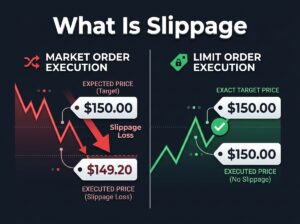
What Exactly Is Slippage?
Slippage is the difference between the price you expected to pay (or receive) and the price at which your order actually executes. It is expressed as a percentage or a dollar amount.
슬리피지는 당신이 기대한 가격과 주문이 실제로 체결된 가격의 차이입니다. 퍼센트 또는 달러 금액으로 표현됩니다.
For example, you place a market order to buy 1 BTC at the displayed price of $74,000. By the time your order reaches the order book and matches with available sell orders, the best available price is $74,120. Your slippage is $120, or about 0.16%. That might seem small, but if you make 200 trades a year with average slippage of 0.15%, you are giving away 30% of a typical beginner’s annual gains to slippage alone — before fees.
예를 들어 표시 가격 $74,000에 1 BTC를 시장가 매수합니다. 주문이 오더북에 도달해 매도 주문과 매칭될 때 최적 가격은 $74,120입니다. 슬리피지는 $120, 약 0.16%입니다. 작아 보일 수 있지만, 연간 200건 거래에 평균 슬리피지 0.15%라면 수수료를 제외하고도 초보자의 연간 수익 중 상당 부분을 슬리피지로만 잃게 됩니다.
Slippage can be positive or negative. Negative slippage (the common kind) means you got a worse price than expected. Positive slippage means you got a better price — this happens occasionally when the market moves in your favor between the time you click and the time your order fills.
슬리피지는 양(positive) 또는 **음(negative)**일 수 있습니다. 음의 슬리피지(일반적인 경우)는 기대보다 나쁜 가격에 체결된 것입니다. 양의 슬리피지는 더 좋은 가격에 체결된 것으로 — 클릭과 체결 사이에 시장이 유리하게 움직일 때 가끔 발생합니다.
Why Does Slippage Happen?
There are three main causes of slippage in crypto.
암호화폐에서 슬리피지가 발생하는 세 가지 주요 원인이 있습니다.
Cause 1: Thin liquidity. When there are not enough orders in the order book near the current price, your market order eats through multiple price levels to get filled. This is the #1 cause of slippage. Bitcoin’s order book depth currently sits below $130 million (within 1% of price) — down from $180-260 million in September 2025. For smaller altcoins, depth can be 100x thinner, meaning even a $5,000 trade can move the price.
원인 1: 얇은 유동성. 현재 가격 근처에 오더북에 충분한 주문이 없으면, 시장가 주문이 체결되기 위해 여러 가격대를 소화합니다. 이것이 슬리피지의 #1 원인입니다. 비트코인 오더북 깊이는 현재 $1.3억 미만(가격 ±1% 이내)으로 2025년 9월의 $1.8~2.6억에서 하락했습니다. 소형 알트코인은 깊이가 100배 더 얇을 수 있어 $5,000 거래만으로도 가격이 움직입니다.
Cause 2: High volatility. During fast-moving markets — like the Hormuz Strait crisis when Bitcoin jumped from $68K to $78K in days — prices change between the moment you see them and the moment your order executes. The faster the market moves, the wider the gap.
원인 2: 높은 변동성. 호르무즈 해협 위기 때 비트코인이 며칠 만에 $68K에서 $78K로 급등한 것처럼 빠르게 움직이는 시장에서는 가격을 본 순간과 주문이 체결되는 순간 사이에 가격이 변합니다. 시장이 빠를수록 격차가 커집니다.
Cause 3: Large order size. If you try to buy 10 BTC with a single market order, you will not get all 10 at the same price. Your order will fill across multiple price levels in the order book, with each level slightly more expensive than the last. This is called price impact and it is essentially guaranteed slippage for large orders.
원인 3: 큰 주문 크기. 시장가로 10 BTC를 한 번에 매수하면 10 BTC 전부 같은 가격에 체결되지 않습니다. 주문이 오더북의 여러 가격대에 걸쳐 체결되며, 각 단계마다 약간씩 비싸집니다. 이를 **가격 충격(price impact)**이라 하며, 대형 주문에서는 사실상 보장된 슬리피지입니다.
Slippage on CEX vs. DEX
Slippage works differently on centralized exchanges (CEX) and decentralized exchanges (DEX), and the difference is significant.
슬리피지는 중앙화 거래소(CEX)와 탈중앙화 거래소(DEX)에서 다르게 작동하며, 그 차이는 상당합니다.
On a CEX (Binance, Coinbase, Tapbit): Slippage depends on order book depth. For BTC/USDT on major exchanges, slippage on a standard retail order (under $10,000) is usually well below 0.1%. For small altcoins, it can be 0.5-2%+. In 2026, Bitget’s guide notes that 1% slippage for BTC is considered high on major platforms.
CEX (Binance, Coinbase, Tapbit)에서: 슬리피지는 오더북 깊이에 따라 달라집니다. 주요 거래소에서 BTC/USDT 기준 일반 소매 주문($10,000 미만)의 슬리피지는 보통 0.1% 미만입니다. 소형 알트코인은 0.5-2% 이상일 수 있습니다. 2026년 Bitget 가이드에 따르면 주요 플랫폼에서 BTC 1% 슬리피지는 높은 것으로 간주됩니다.
On a DEX (Uniswap, PancakeSwap, Jupiter): There is no traditional order book. Instead, DEXs use automated market makers (AMMs) — liquidity pools where your trade shifts the ratio of tokens in the pool, and the price adjusts accordingly. Slippage on DEXs is typically higher, ranging from 0.3% to over 1% for volatile or low-liquidity tokens. DEX spot share grew from 6.9% in January 2024 to 13.6% by January 2026 (MEXC data), meaning more traders are exposed to DEX slippage than ever before.
DEX (Uniswap, PancakeSwap, Jupiter)에서: 전통적인 오더북이 없습니다. 대신 자동화된 시장 조성자(AMM) — 유동성 풀을 사용하며, 거래가 풀 내 토큰 비율을 변경하고 가격이 그에 따라 조정됩니다. DEX의 슬리피지는 일반적으로 더 높아 변동성이 크거나 유동성이 낮은 토큰의 경우 0.3%~1% 이상입니다. DEX 현물 점유율은 2024년 1월 6.9%에서 2026년 1월 13.6%로 성장(MEXC 데이터)하여 그 어느 때보다 많은 트레이더가 DEX 슬리피지에 노출되어 있습니다.
The hidden DEX danger — MEV and sandwich attacks: On decentralized exchanges, bots can see your pending transaction and exploit it. A sandwich attack works like this: a bot sees your buy order in the transaction pool, places its own buy order before yours (pushing the price up), and then sells immediately after your order fills (at the higher price). You get worse slippage, and the bot pockets the difference. A 2026 SSRN research paper estimated cumulative Ethereum MEV exceeds $1.38 billion through mid-2024 alone, and the practice continues. One trader in March 2025 lost $215,000 to a single sandwich attack.
숨겨진 DEX 위험 — MEV와 샌드위치 공격: 탈중앙화 거래소에서 봇이 당신의 대기 중인 트랜잭션을 보고 악용할 수 있습니다. 샌드위치 공격은 이렇게 작동합니다: 봇이 트랜잭션 풀에서 당신의 매수 주문을 발견하고, 당신보다 먼저 매수 주문을 넣어 가격을 올린 뒤, 당신의 주문이 체결된 후 높은 가격에 즉시 매도합니다. 당신은 더 나쁜 슬리피지를 겪고 봇이 차액을 가져갑니다. 2026년 SSRN 연구에 따르면 이더리움 누적 MEV는 2024년 중반까지만 $13.8억을 초과하며, 이 관행은 계속되고 있습니다. 2025년 3월 한 트레이더는 한 번의 샌드위치 공격으로 $215,000을 잃었습니다.
How to Calculate Slippage
The formula is straightforward:
공식은 간단합니다:
Slippage (%) = ((Actual Execution Price – Expected Price) ÷ Expected Price) × 100
슬리피지 (%) = ((실제 체결 가격 – 기대 가격) ÷ 기대 가격) × 100
Example: You expected to buy ETH at $2,200 but your order filled at $2,211. Slippage = (($2,211 – $2,200) ÷ $2,200) × 100 = 0.5%. On a $5,000 position, that is $25 lost to slippage — on top of your trading fees.
예시: ETH를 $2,200에 매수하려 했으나 $2,211에 체결. 슬리피지 = (($2,211 – $2,200) ÷ $2,200) × 100 = 0.5%. $5,000 포지션에서 수수료 외에 슬리피지로 $25 손실.
Record slippage in your trading journal for every trade. After a month, add up the total — you might be shocked by how much it costs.
모든 거래의 슬리피지를 거래 일지에 기록하세요. 한 달 후 합산하면 비용이 얼마나 되는지 놀랄 수 있습니다.
7 Ways to Minimize Slippage
Here are seven practical strategies, ordered from most important to least.
가장 중요한 것부터 순서대로 7가지 실전 전략입니다.
1. Use limit orders instead of market orders. This is the single most effective way to eliminate slippage. A limit order guarantees your price — you either get filled at your specified price or not at all. On Tapbit and most exchanges, you can set a limit buy at $73,800 and it will only execute at $73,800 or lower. The tradeoff is that your order might not fill if the price does not reach your level — but that is far better than paying an invisible tax on every trade.
1. 시장가 주문 대신 지정가 주문을 사용하세요. 슬리피지를 제거하는 가장 효과적인 방법입니다. 지정가 주문은 가격을 보장합니다 — 지정한 가격에 체결되거나 아예 체결되지 않습니다. Tapbit과 대부분의 거래소에서 $73,800에 지정가 매수를 설정하면 $73,800 이하에서만 체결됩니다. 가격이 해당 수준에 도달하지 않으면 체결되지 않을 수 있지만, 매 거래마다 보이지 않는 세금을 내는 것보다 훨씬 낫습니다.
2. Check order book depth before trading. Before placing any trade, glance at the order book. If you see thick clusters of orders near the current price, slippage will be low. If the book looks thin — few orders, wide gaps between price levels — expect high slippage or wait for better conditions.
2. 거래 전 오더북 깊이를 확인하세요. 거래 전에 오더북을 한번 살펴보세요. 현재 가격 근처에 두꺼운 주문 묶음이 보이면 슬리피지가 낮을 것입니다. 오더북이 얇으면 — 주문이 적고 가격대 사이 간격이 넓으면 — 높은 슬리피지를 예상하거나 더 나은 조건을 기다리세요.
3. Trade high-liquidity pairs. BTC/USDT and ETH/USDT on major exchanges have the tightest spreads and deepest order books. A micro-cap altcoin with $50,000 daily volume will give you terrible slippage. Stick to liquid pairs, especially as a beginner. If you must trade a low-liquidity coin, reduce your position size significantly.
3. 유동성이 높은 거래쌍을 거래하세요. 주요 거래소의 BTC/USDT와 ETH/USDT는 가장 좁은 스프레드와 가장 깊은 오더북을 가지고 있습니다. 일일 거래량 $50,000인 초소형 알트코인은 끔찍한 슬리피지를 줍니다. 특히 초보자는 유동성이 높은 페어를 고수하세요. 저유동성 코인을 거래해야 한다면 포지션 크기를 크게 줄이세요.
4. Split large orders. Instead of buying 5 BTC in one market order, split it into five orders of 1 BTC each, placed at slightly different price levels. This reduces your price impact on the order book. Professional traders use algorithmic tools (TWAP, VWAP) for this, but you can do it manually by spacing orders 30-60 seconds apart.
4. 큰 주문을 분할하세요. 시장가로 5 BTC를 한 번에 매수하는 대신 약간 다른 가격에 1 BTC씩 5건으로 나누세요. 오더북에 대한 가격 충격이 줄어듭니다. 전문 트레이더는 알고리즘 도구(TWAP, VWAP)를 사용하지만, 주문 간격을 30-60초로 두어 수동으로도 할 수 있습니다.
5. Avoid trading during extreme volatility. When Bitcoin is moving $2,000 in 10 minutes — like during the Hormuz reopening news — slippage explodes. Market orders placed during chaotic moments routinely fill 0.5-1% worse than expected. Wait for the dust to settle, check RSI and volume, and enter with a limit order when conditions calm down. Remember the 15-minute rule from the FOMO article — if you wait, the urgency usually fades.
5. 극심한 변동성 중 거래를 피하세요. 호르무즈 해협 재개 뉴스 때처럼 비트코인이 10분에 $2,000 움직일 때 슬리피지가 폭발합니다. 혼란스러운 순간의 시장가 주문은 기대보다 0.5-1% 나쁘게 체결되는 것이 일상입니다. 상황이 안정될 때까지 기다리고, RSI와 거래량을 확인한 뒤 지정가 주문으로 진입하세요. FOMO 글의 15분 규칙을 기억하세요 — 기다리면 긴박감은 대개 사라집니다.
6. Set slippage tolerance on DEXs. When trading on Uniswap, Jupiter, or PancakeSwap, you can set a slippage tolerance — the maximum percentage of slippage you are willing to accept. The default is often 0.5%. For stablecoins, set it to 0.1%. For volatile tokens, 1-2% may be necessary but go higher only if you must. Setting it too high exposes you to sandwich attacks; setting it too low means your transaction may fail.
6. DEX에서 슬리피지 허용 범위를 설정하세요. Uniswap, Jupiter, PancakeSwap에서 거래할 때 슬리피지 허용 범위(slippage tolerance) — 수용할 최대 슬리피지 비율 — 를 설정할 수 있습니다. 기본값은 보통 0.5%입니다. 스테이블코인은 0.1%로, 변동성 토큰은 1-2%가 필요할 수 있지만 꼭 필요할 때만 높이세요. 너무 높으면 샌드위치 공격에 노출되고, 너무 낮으면 트랜잭션이 실패합니다.
7. Trade during peak liquidity hours. Crypto trades 24/7, but liquidity is not evenly distributed. The overlap between US and European trading hours (roughly 14:00-22:00 UTC) typically has the deepest order books and the tightest spreads. Trading at 3 AM when most market makers are offline means thinner books and more slippage.
7. 유동성이 가장 높은 시간대에 거래하세요. 암호화폐는 24시간 거래되지만 유동성은 균등하지 않습니다. 미국과 유럽 거래 시간이 겹치는 시간대(대략 UTC 14:00-22:00, KST 23:00-07:00)가 일반적으로 가장 깊은 오더북과 가장 좁은 스프레드를 가집니다. 대부분의 시장 조성자가 오프라인인 새벽 3시에 거래하면 오더북이 얇고 슬리피지가 커집니다.
Slippage Checklist Before Every Trade
Before entering any trade, run through these five checks. Is the spread tight (under 0.1% for BTC)? Is the order book deep enough for my order size? Am I using a limit order? Is volatility manageable right now (no panic spike in the last 30 minutes)? Have I set my slippage tolerance correctly if trading on a DEX? If any answer is “no,” adjust before placing the trade.
거래 진입 전 다섯 가지를 점검하세요. 스프레드가 좁은가(BTC 기준 0.1% 미만)? 내 주문 크기에 맞게 오더북이 충분히 깊은가? 지정가 주문을 사용하고 있는가? 현재 변동성이 관리 가능한가(최근 30분 내 패닉 스파이크 없음)? DEX 거래 시 슬리피지 허용 범위를 올바르게 설정했는가? 하나라도 “아니오”이면 거래 전에 조정하세요.
Start Practicing
Open Tapbit and compare the experience of placing a market order vs. a limit order on BTC/USDT. Notice the price difference. Check the order book depth before and after your order. Record both the expected and actual fill price in your trading journal. Over time, the habit of monitoring slippage will become automatic — and your trading costs will drop significantly.
Tapbit에서 BTC/USDT에 시장가 주문과 지정가 주문을 넣어보고 경험을 비교하세요. 가격 차이를 확인하세요. 주문 전후로 오더북 깊이를 확인하세요. 기대 체결가와 실제 체결가를 모두 거래 일지에 기록하세요. 시간이 지나면 슬리피지를 모니터링하는 습관이 자동이 되고, 거래 비용이 크게 줄어들 것입니다.
Disclosure: This article contains affiliate links. We may earn a commission at no extra cost to you.
공개: 이 글에는 제휴 링크가 포함되어 있습니다. 추가 비용 없이 커미션을 받을 수 있습니다.